
Building an AI-Driven Digital Twin Factory: Grand Prize, MSS AX Best Practice Awards Automotive Parts Manufacturing
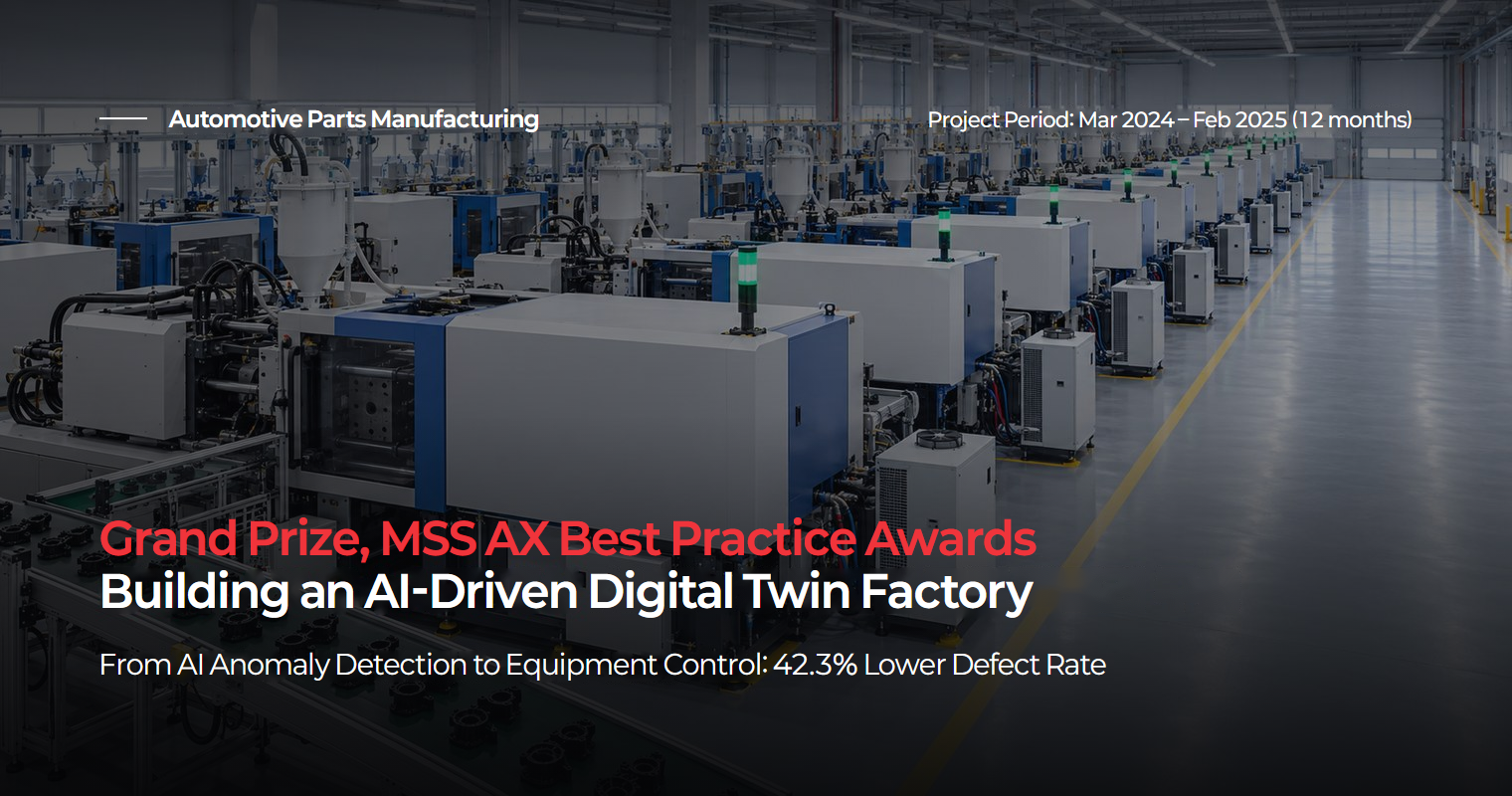

Data Was Being Collected, but Defect Causes Could Not Be Traced
Production Records Were Not Linked to Individual Parts
The plant produces automotive transmission parts on 25 injection molding machines. Equipment data was already being collected, but production records were managed by box-level lots, so they could not be linked to each individual part.
When a defective part was found, there was no way to trace the temperature and pressure it was molded under. Without data linking each part to its process conditions, there was nothing to train an AI model on.
Equipment Issues Were Handled Only After Breakdowns
Equipment problems were detected only after a failure occurred. Process conditions were adjusted based on operators’ experience.
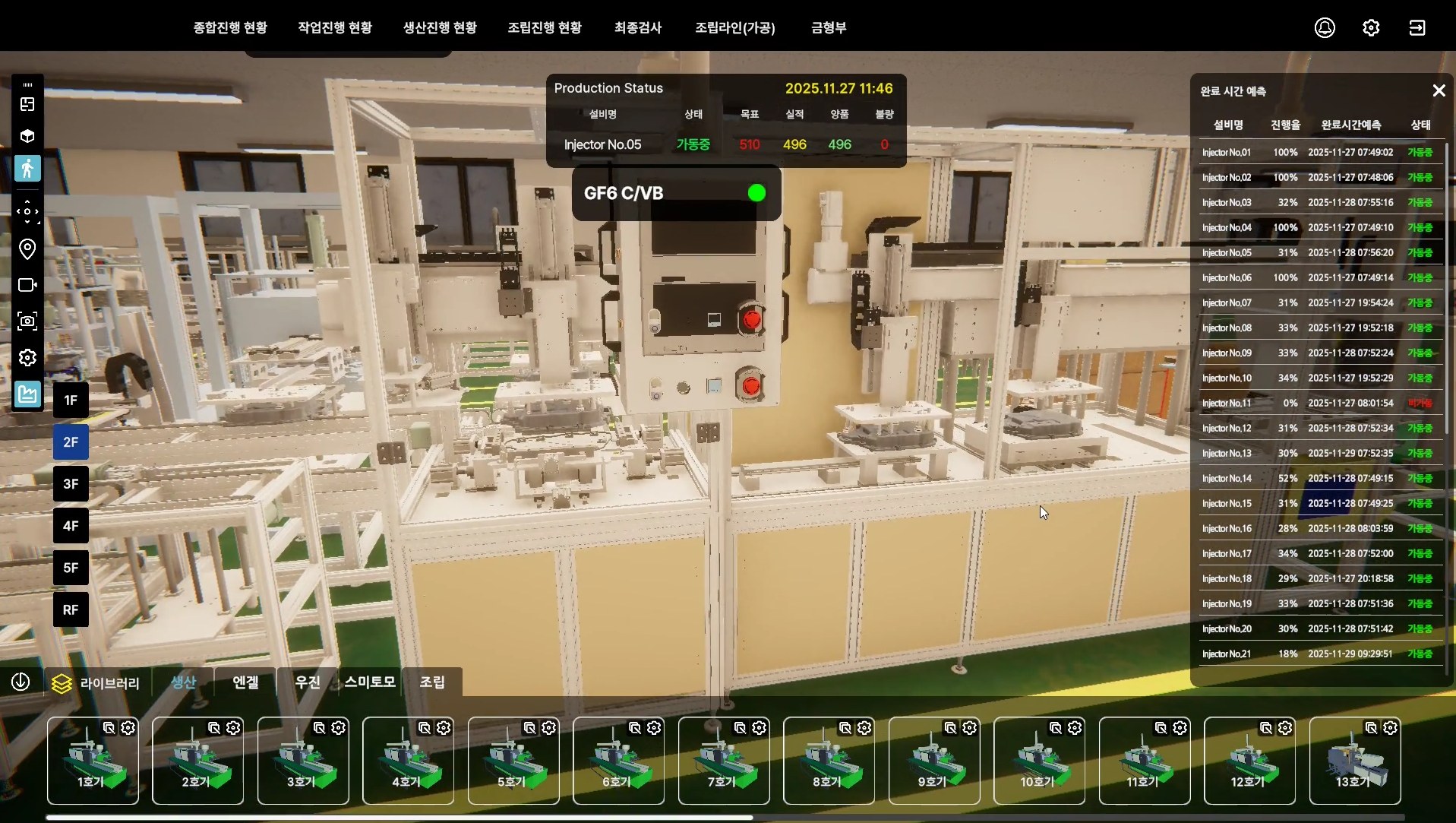
[이미지] 3D 가상공장 관제 화면. 설비별 생산 현황과 진행률을 한 화면에서 확인합니다.
Linking Data to Each Part and Feeding AI Decisions into Equipment Control
UVC delivered AI analytics, a digital twin, and equipment control integration for this plant.
Process Conditions Mapped to Each Part
Temperature, pressure, and cycle time from the injection molding machines were collected in real time using the OPC UA and Asset Administration Shell (AAS) standards. The collected process conditions were mapped one-to-one to each part’s ID and quality inspection results. The production history of every individual part can now be traced.
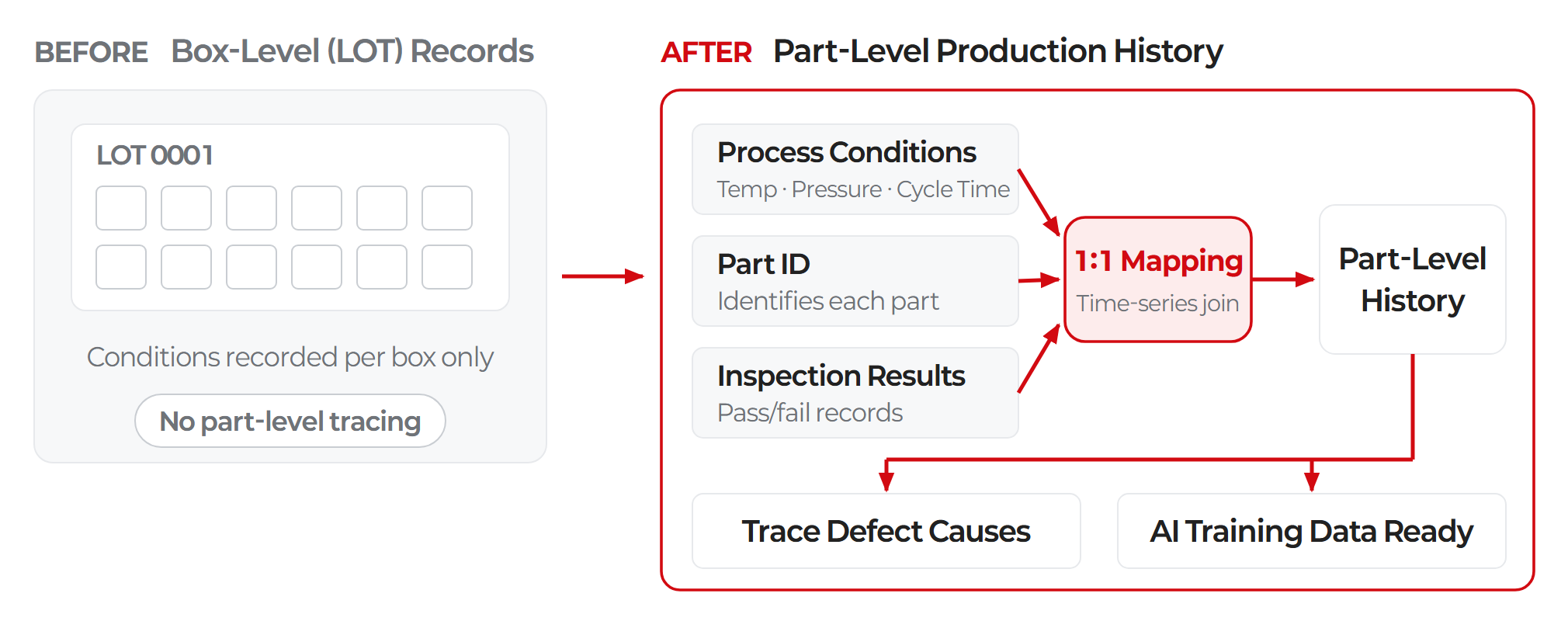
[Image] Part-level mapping structure. Box-level records were converted into part-level production histories.
The Entire Plant Built as a 3D Virtual Factory
Managers monitor the operating status and production output of each injection molding machine in real time on a single screen.
Anomalies Detected Using Only Normal-State Data
The AI model is trained only on normal operating data. Without collecting separate defect cases, it detects equipment anomalies and early signs of failure from subtle changes in vibration, current, and temperature. It also analyzes motor power consumption to identify abnormal trends.
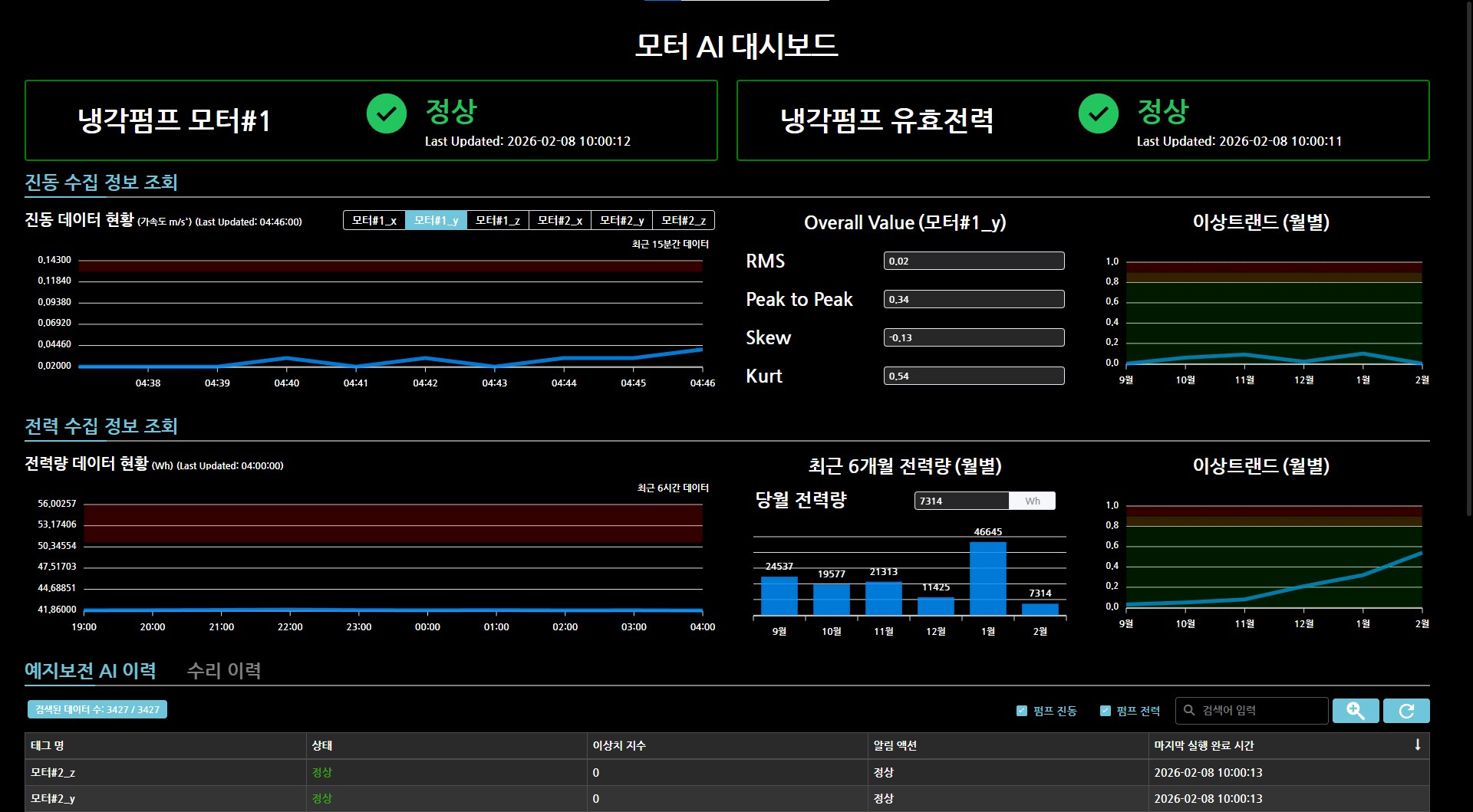
[Image] Motor predictive maintenance dashboard. Anomalies are identified from vibration and power consumption trends.
AI-Calculated Conditions Reach the Equipment Only After Manager Review
The AI prediction model calculates optimal process conditions from production data. When an anomaly is detected, it alerts the manager. Any change to equipment settings is sent to the PLC only after the manager confirms it.
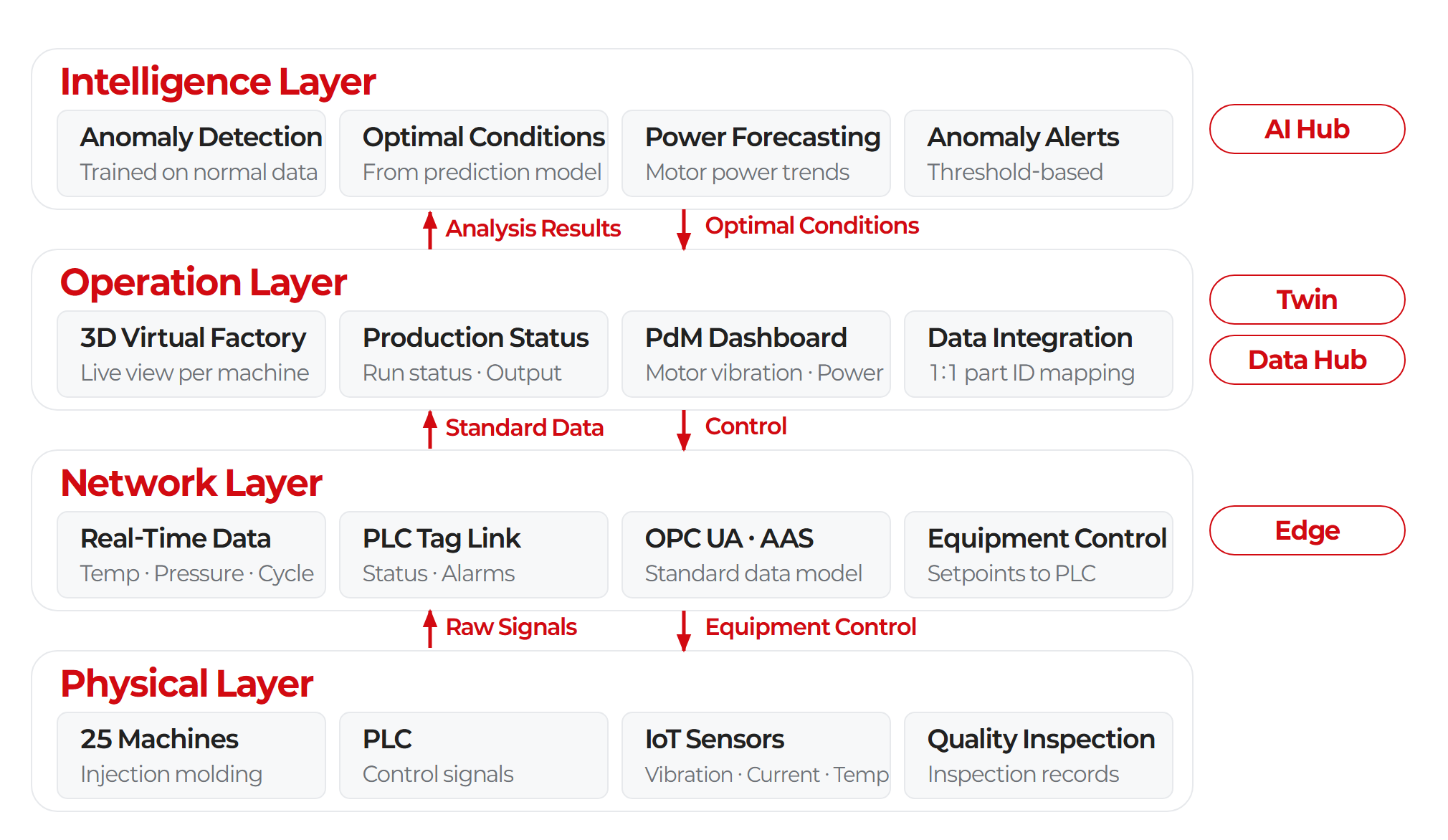
[Image] OCTOPUS four-layer architecture. Field data flows up to the intelligence layer, and actions confirmed by the manager flow back down to equipment control.
42.3% Lower Defect Rate, 20.8% Higher Productivity
Quality and Productivity Improved Together
The process defect rate fell 42.3%, from 0.26% before AI adoption to 0.15%. Hourly output rose 20.8%, from 149 to 179.9 units.
Defect Causes Traced to Each Part
When a defect occurs, the process conditions of that part are traced immediately to analyze the cause. Equipment anomalies are detected and addressed before a breakdown. Managers see what is happening on the shop floor from the monitoring screen and act right away.
Grand Prize at the Ministry of SMEs and Startups AX Best Practice Awards
Based on these results, the company received the Grand Prize at the 2025 AX Best Practice Awards hosted by Korea’s Ministry of SMEs and Startups. UVC was then selected as the lead solution provider for the Autonomous Factory Development Support Program (2026–2028) at the same plant.
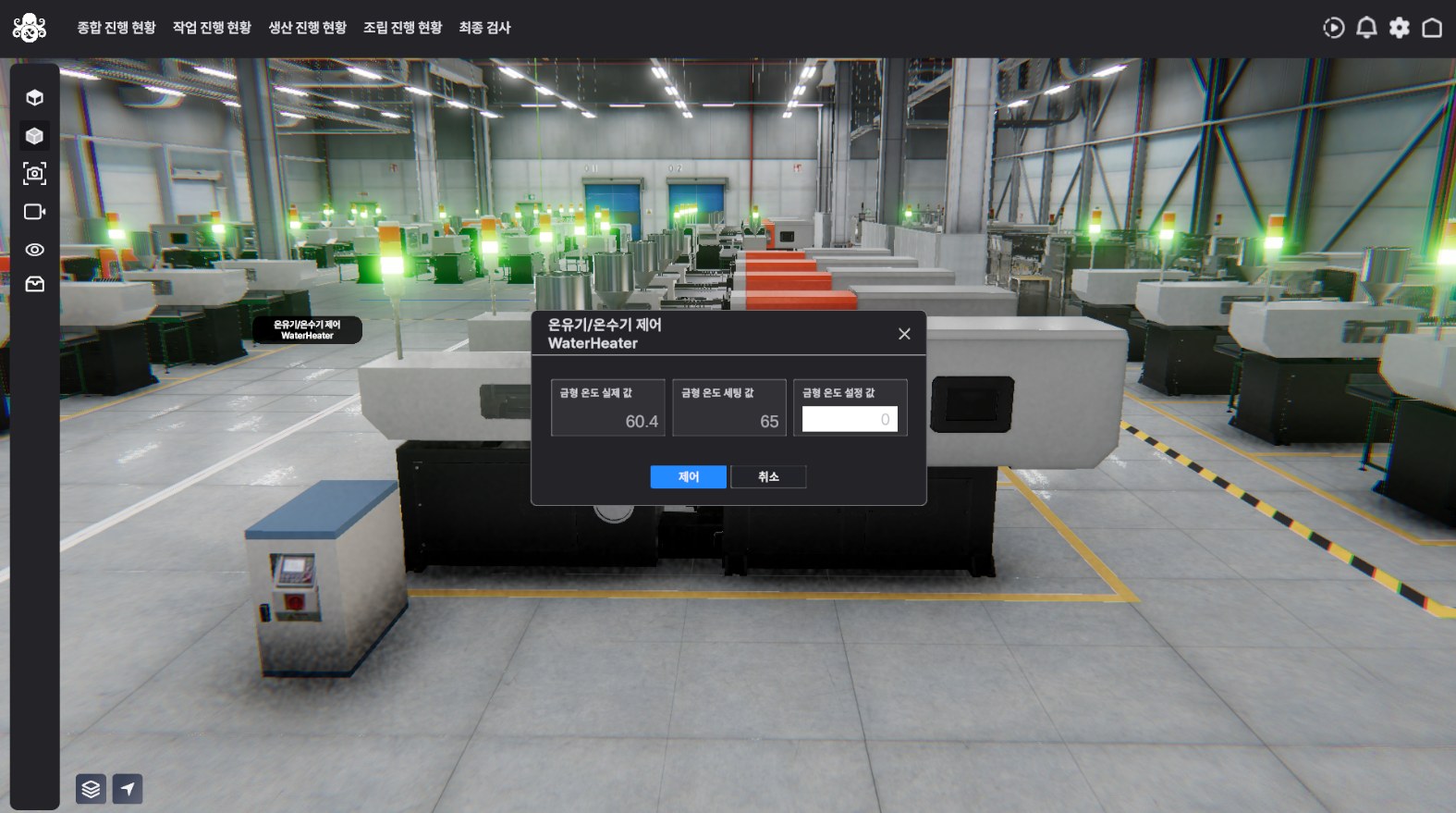
[Image] Equipment control screen. Managers check and control actual mold temperatures against their setpoints.
Screen images on this page are examples provided to illustrate features.